Expert care for your wisdom teeth - from evaluation to comfortable extraction
Whether your wisdom teeth are causing pain or simply need monitoring, we'll assess your smile and recommend the most appropriate treatment for your long-term oral health.
Not every wisdom tooth needs to be removed. Many people have wisdom teeth that grow normally and remain healthy for life. Others may develop problems because there isn't enough room for the teeth to erupt properly.
During your examination, we'll assess the position of your wisdom teeth using a clinical examination and X-rays before recommending whether monitoring or removal is the best option.
If you've noticed food catching around your back teeth, you may find it helpful to read about why food keeps getting stuck between your teeth, as this can sometimes be an early sign that a wisdom tooth isn't erupting normally.
You should arrange an assessment if you notice:
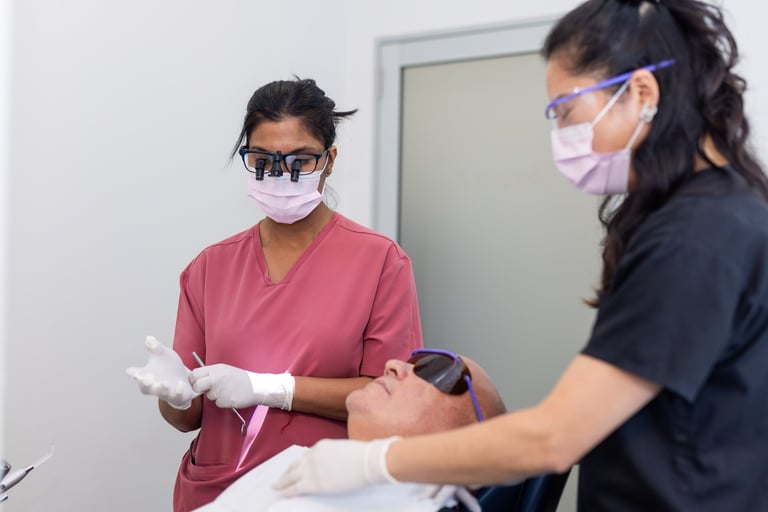
Wisdom teeth are the final set of molars, usually appearing between the ages of 17 and 25. Because they erupt later than other teeth, there often isn't enough space for them to grow into the correct position.
When this happens, wisdom teeth may become impacted, partially erupted or difficult to clean, increasing the risk of future dental problems.
Regular monitoring as part of regular dental assessments helps track how these teeth are developing over time.
The position of a wisdom tooth and its relationship to nearby structures affect treatment planning. Depending on the case, removal can involve risks such as infection, dry socket, injury to neighbouring teeth or nerve-related changes in sensation. Your dentist will explain the risks relevant to your assessment.
Complex tooth positions, medical factors or anaesthetic needs may make further assessment or specialist care appropriate. Monitoring may be recommended where a tooth is healthy and removal is not indicated.
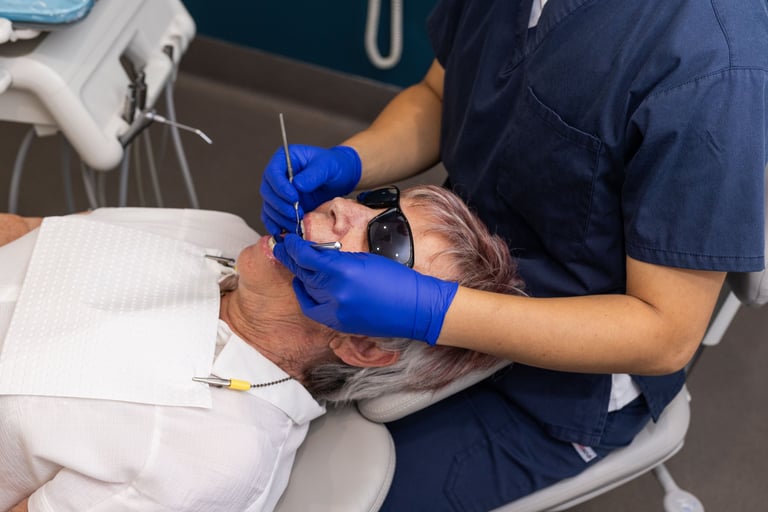
An impacted wisdom tooth is one that cannot fully erupt because it is blocked by neighbouring teeth, gum tissue or bone.
Impacted teeth are more likely to cause pain, infection, decay, gum disease and damage to nearby teeth if left untreated.
For a closer look at what treatment involves, our guide to wisdom teeth removal and what to expect walks through the process, recovery and aftercare tips step by step.
We examine your teeth and take X-rays to assess the position of your wisdom teeth.
We'll explain whether removal is recommended and discuss your treatment options.
Your wisdom tooth is gently removed using techniques designed to maximise comfort and minimise trauma.
You'll receive personalised aftercare instructions to support healing and reduce the risk of complications.
Wisdom tooth removal may be recommended if your teeth are:
Recovery varies with the extraction and your individual health. Follow the written instructions provided for your procedure, including wound care, eating, activity and any medicines advised. Plan time to rest and ask when you can return to work, school or sport.
Contact the clinic for worsening pain, persistent bleeding, fever, increasing swelling or changes in sensation. Seek emergency dental care for breathing or swallowing difficulty or severe uncontrolled bleeding. Attend any recommended review, and contact the clinic if you are unsure whether your recovery is progressing as expected.
If you're experiencing discomfort or have been told your wisdom teeth may need attention, we're here to help. Book a consultation for a thorough assessment and personalised treatment advice.
We understand that wisdom tooth removal can feel daunting. Our experienced team takes the time to explain every step, answer your questions and provide gentle care to help you feel comfortable throughout your treatment.
Even if your wisdom teeth aren't causing discomfort today, regular examinations and dental X-rays allow us to monitor their position as they develop. Identifying potential problems early often makes treatment simpler and helps protect the surrounding teeth and gums.
Regular monitoring can help detect:
Early detection leads to simpler treatment
Book your appointment today
Shop 7, 11/21 Kingston Rd
Underwood QLD 4119, Australia
Mon – Fri: 9:00am – 4:30pm
Sat & Sun: Closed
Common questions about wisdom teeth removal
Common signs include pain, swelling, jaw stiffness, headaches, or difficulty cleaning the back teeth. At My Dental Home, our team can assess your wisdom teeth with an examination and X-rays.
Wisdom teeth removal is typically performed under local anaesthetic to keep patients comfortable during the procedure. Mild swelling or discomfort afterwards is common and usually improves within a few days.
Further assessment may be appropriate for a complex tooth position, relevant medical factors or particular anaesthetic needs. Your dentist will discuss whether treatment at the clinic or referral is appropriate after examining your teeth and reviewing imaging.
Most patients recover within a few days to a week after wisdom teeth treatment. Our Underwood dentist will provide detailed aftercare instructions to help support healing and minimise discomfort.
The cost depends on the number and position of the teeth, extraction complexity, imaging and anaesthetic arrangements. Ask whether the estimate includes the assessment, procedure and follow-up, and whether a referral or additional care would involve separate fees.
Some wisdom teeth remain healthy and can be monitored. Others may develop decay, repeated gum infection or problems affecting nearby teeth. Your dentist will assess the position and health of the teeth and explain whether monitoring or removal is appropriate.
Send us a message and we'll get back to you shortly
Thank you for reaching out. We'll be in touch soon.